
When considering the purchase of an artwork, one question often arises: should you favour a unique piece, or can a screen print or limited edition be just as worthwhile?
The answer depends first and foremost on what you are looking for. A unique work naturally possesses a particular sense of singularity. However, a work produced in several examples should not automatically be regarded as a simple reproduction. In modern and contemporary art, screen prints, lithographs, photographs, editioned sculptures and artists’ multiples have long held a legitimate place within artistic creation.
What is a unique artwork?
A unique artwork is, as its name suggests, created as a single example. It may be a painting, a drawing, a sculpture or any work produced directly by the artist without an editioning process.
It therefore represents the original object in its most exclusive form: no second identical example exists. This uniqueness often contributes to its value. Availability is, by definition, extremely limited and, for certain artists, unique works can become increasingly difficult to acquire as their recognition grows.
However, uniqueness is not the only factor to consider when assessing the significance or desirability of an artwork. The importance of the artist, the period in which the work was created, its provenance, subject, technique, condition and its place within the artist’s wider body of work are equally important.
What is a limited edition?
Unlike a unique piece, a limited edition is produced in several examples, with the total number determined in advance.
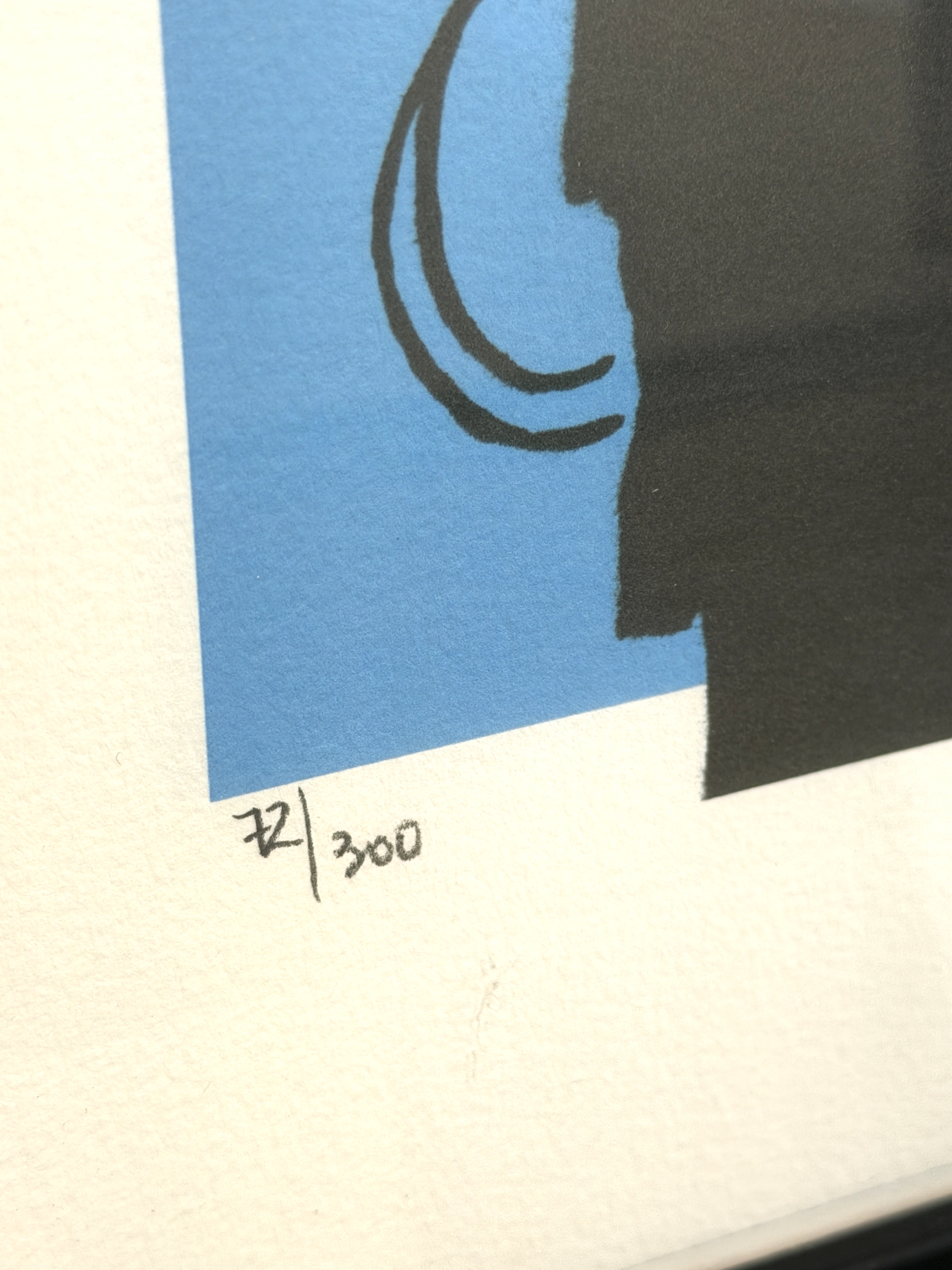
A work marked 25/100, for example, is the twenty-fifth example from a total edition of one hundred.
This principle applies to many techniques, including bronze sculptures, photographs, prints, lithographs and screen prints. The idea remains the same: several examples exist, but the total number is deliberately restricted.
An edition therefore allows several collectors to own a work originating from the same artistic creation while maintaining a principle of rarity. It is precisely this balance between circulation and limitation that allowed the multiple to become a major artistic form during the twentieth century, particularly with the development of photography, screen printing and Pop Art.
Is a screen print a genuine work of art?
This is probably one of the most common questions among new collectors.
And the answer is yes: a screen print can absolutely be an original work of art.
It is important, however, to distinguish an original screen print from a decorative reproduction printed from an image of an existing artwork. Screen printing is a genuine artistic printing technique. The image is created through successive applications of ink pushed through a screen, making it possible, among other things, to achieve particularly rich and intense areas of colour. Many major twentieth-century artists fully incorporated this technique into their artistic practice. In such cases, the multiplication of the image is not a secondary copy of an original work: it forms part of the artistic concept itself. This is particularly evident in Pop Art and, more recently, in certain practices associated with street art, where repetition, circulation and the reappropriation of images play a central role. An edition should therefore not be confused with a reproduction lacking artistic value. The essential question is instead to understand the circumstances in which the work was created, produced and authenticated.
How can you recognise a quality edition?
Before acquiring a screen print or any editioned artwork, several elements should be carefully considered.
The numbering
A limited edition generally indicates the total number of examples produced.
Some works may also bear markings such as AP, meaning Artist’s Proof — or EA, Épreuve d’Artiste, in French. These examples are traditionally produced alongside the main numbered edition.
The signature
Depending on the artist and the edition, a work may be hand-signed, signed within the image or accompanied by other forms of authentication.
A handwritten signature is often valued by collectors, but its absence does not automatically mean that a work is not authentic. The characteristics of the edition must always be considered as a whole.
Certificate of authenticity and provenance
Traceability is essential.
A certificate of authenticity, precise documentation and a clearly established provenance all help secure an acquisition. They can identify the artist, title of the work, technique, dimensions, edition number and, where applicable, the publisher.
Purchasing through a professional gallery also means benefiting from expert guidance on each of these elements. Is a smaller edition more valuable than a larger one? All else being equal, a smaller edition naturally creates a greater degree of rarity. A sculpture produced in an edition of eight therefore does not have the same level of availability as a screen print produced in several hundred examples. However, it would be too simplistic to conclude that a smaller edition is always more desirable. The value of an artwork also depends on the artist, the importance of the image, the period in which it was created, market demand, the technique used and the recognition of that particular edition. An especially iconic image by an artist may therefore remain highly sought after even when produced in a relatively large edition. The number of examples should consequently be considered as one factor among many.
Why choose a limited edition?
For many collectors, editions offer a particularly appealing entry point into an artist’s world.
They generally make it possible to acquire a work by an artist at a more accessible price than a unique piece, without necessarily giving up authenticity or the principle of rarity. This can provide access to the work of an already established artist whose unique pieces may have become considerably more difficult to acquire. Yet their appeal is not limited to price. Certain screen prints and editions feature images that have become central to an artist’s visual language. Collecting them therefore means owning a genuine part of that artistic universe. For some experienced collectors, artists’ multiples even constitute a collecting field in their own right.